Key Takeaways
- Uneven ground can change gate clearance and start to make a working system drag or even bind.
- Align, hinges, posts, rollers, all check. Move the gate by hand before assuming the opener has been damaged.
- Proper driveway gate installation can reduce recurring clearance and alignment problems over time.
Introduction
If a gate is designed to stop in a specific place and instead pulls short, drags along the ground, or even reverses back into your house, then it could simply be due to uneven ground.
Arizona’s extreme climate and outdoor environment can affect structures.
That is why at Elite Garage Doors & Gates, we service the entire state of Arizona, including Phoenix, Scottsdale, Mesa, Gilbert, Tucson, and other Arizona cities for gate installation, gate repair, remote openers, and gate automation.
What does uneven ground have to do with a gate that won’t close?
Adequate clearance needs to be allowed for a swing or sliding gate for its full travel. An uneven driveway means that the clearance will vary across the opening of the driveway. A gate that previously had been OK to open and close may start to rub on the ground or even get stuck on an uneven section, opening at an angle.
The fact that an uneven driveway poses a problem with an automatically operated gate also reveals potential installation problems. Here, it is not just important to position the posts accurately and to align the gate correctly with the driveway, but also with the actual grade of the driveway, not with its appearance.
Could the hinges or posts be the real problem?
Yes. Hinges carry the gate weight, so worn, loose, or misaligned hinges can allow it to sag. Posts can also shift because of ground movement, impact, drainage issues, or unstable footing.
Watch the gate while closing it manually. Does the gap between the gate and pavement change? Does one corner drop lower than the other? Does it move freely until the final few inches? These clues can reveal alignment or clearance issues.
Is the gate opener actually failing?
Sometimes. An opener has to move the gate against its load and resistance. If the gate rubs or binds because of uneven ground, the opener may struggle, stop, or activate its safety response.
Before replacing the motor, check the gate itself. A balanced gate should move smoothly. If it feels heavy, catches, or needs to force near the closed position, a stronger opener may only hide the underlying problem.
What should you check before calling for repairs?
Look for loose hinge hardware, a leaning post, damaged rollers, debris, and cracks around the post footing. Also notice whether the gate behaves differently after rain or extreme weather.
For automated systems, don’t repeatedly force the gate through a sticking point. Continued strain can stress the drive mechanism and hardware. If the gate has become noticeably harder to operate, professional inspection is the safer next step.
Can the gate be adjusted for a sloped driveway?
Often. The solution depends on the gate design and grade. A technician may adjust to hinges, hardware, stops, rollers, or alignment. In some cases, the gate itself needs modification, or the surrounding driveway needs attention.
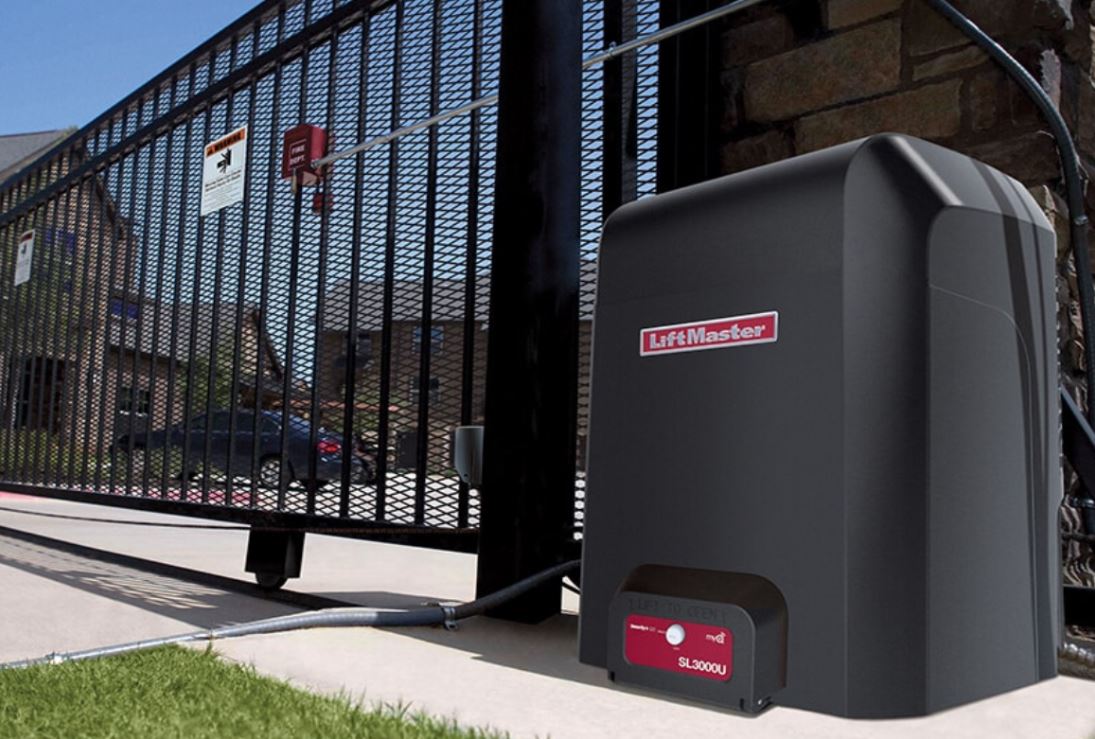
An opener must match the gate size, weight, and travel; different gate opener manufacturers suit different applications. Gate opener manufacturers offer different options, but selection should follow a Mechanical inspection. Reputable electric gate opener suppliers can offer options, but correct installation and setup still matter.
When does driveway gate installation need to be reconsidered?
If your gate is having trouble opening at the same spot for years, it may be due to a slope in your driveway and the original designer not accounting for the changing grade in that area. Simply repairing your gate opener will not solve the problem.
A professional can assess your specific situation by checking the gate clearance, inspecting its posts, and determining if the gate needs to be repositioned. Account for grade changes during driveway gate installation.
What can Arizona homeowners do to prevent the problem?
We recommend you keep the path clear, check all hinges and rollers, and tighten up any loose parts or hardware. You can also have the system checked if you see any signs of scraping or unusual motor noise, or if the gates keep stopping for no reason.
We offer gate installation and gate repair services throughout Arizona, including Phoenix, Scottsdale, Mesa, Chandler, Tucson, and Peoria. Our expert gate repair and installation technicians are available for same-day service and 24-hour emergency service.
Ask your supplier about the compatibility, safety features, and warranty of the replacement equipment. Compare the gate opener manufacturers based on the duty cycle they can handle, and the site conditions they are suited for. A supplier of electric gate openers can offer you a range of different models, but an experienced technician will be able to choose the best model for your gate.
FAQs
-
Why won’t my gate fully close on uneven ground?
When a driveway is not perfectly level (i.e., uneven), the gate will have less and less clearance when it moves and thus may scrape, drag, bind, or even stop short of being fully closed.
-
How can I tell if the problem is the gate or the opener?
When the gate is closed manually and does not open smoothly, then the problem may not be the opener. Check the gate for feelings of being ‘heavier than normal’ or for ‘catching’ or for ‘rubbing’ against something near the closed position. The cause may be related to the hinges, posts, rollers, alignment, or ground clearance.
-
Can a gate be adjusted to work properly on a sloped driveway?
Yes. Most gates can be adjusted to operate satisfactorily on uneven surfaces. The hinges, rollers, gate stops, and other hardware items can be adjusted to compensate for uneven surfaces. Occasionally, the gate itself or the driveway may need to be modified to allow correct operation of the gate.
-
When should I have my driveway gate professionally inspected?
A professional assessment by a specialist may be needed in the following circumstances: your gate keeps stopping at the same point, scraping the ground, becoming harder to open, making unusual noises whilst the motor is operating, or not having the correct clearances after having been previously adjusted.