The garage door is the biggest moving part in your house! Many homeowners believe that the automatic opener does all the work, but the mechanical work is actually done by the garage door springs. These compact coils help balance the door’s heavy weight, making it easy to open and close. As soon as spring breaks, your whole garage door setup comes to a standstill, which can leave you stuck with a car inside and a serious safety threat.
Knowing what causes these essential parts to fail and how to correct the problem helps avoid structural catastrophe and expensive emergency property repairs. When you are facing an issue with a garage door that is not lifting, you need to find a garage door repair service that can help you get the door up and running.
The Leading Causes of Busted Garage Door Springs
Garage door springs won’t suddenly snap for no good reason. They are under very high mechanical stress, and several different environmental and usage-related factors lead to their eventual failure.
Everyday Wear and Tear (Cycle Lifespan)
The most obvious answer to the problem of a failed spring is basic arithmetic. Opening and closing your garage door is one round. The usual life of a standard residential torsion spring is about 10,000 cycles. Cycling the door four to five times a day, if your garage is the main entryway to your house, the springs will inevitably wear out in 5 to 7 years. After a while, wear and tear from loading and unloading causes minute cracks to develop in the steel, leading to failure.
Rust and Corrosive Buildup
Rust is like a silent killer on mechanical steel. As moisture builds up inside a garage, surface rust may start to form around the coils. When the spring is expanding and contracting, the raw rust rubs the coils and degrades the steel. This unneeded tension leads to structural deterioration and failure before reaching the desired cycle mark.
Changes in Temperature and Extreme Weather Events
Rugged temperature variations are extremely damaging to metal parts. Steel springs contract in cold snaps and expand in very hot weather in areas with wide swings in temperature. This quick expansion and contraction of the metal renders it brittle and prone to snapping when it is suddenly stretched.
Poor Maintenance and Inadequate Lubrication
If your garage door system is neglected, it will have to work much harder to operate. If springs are not properly lubricated regularly, they must work unevenly, particularly if the door becomes misaligned. One spring is likely to work twice as hard when a door is out of balance, causing early failure.
Professional Solutions for Garage Door Spring Failure
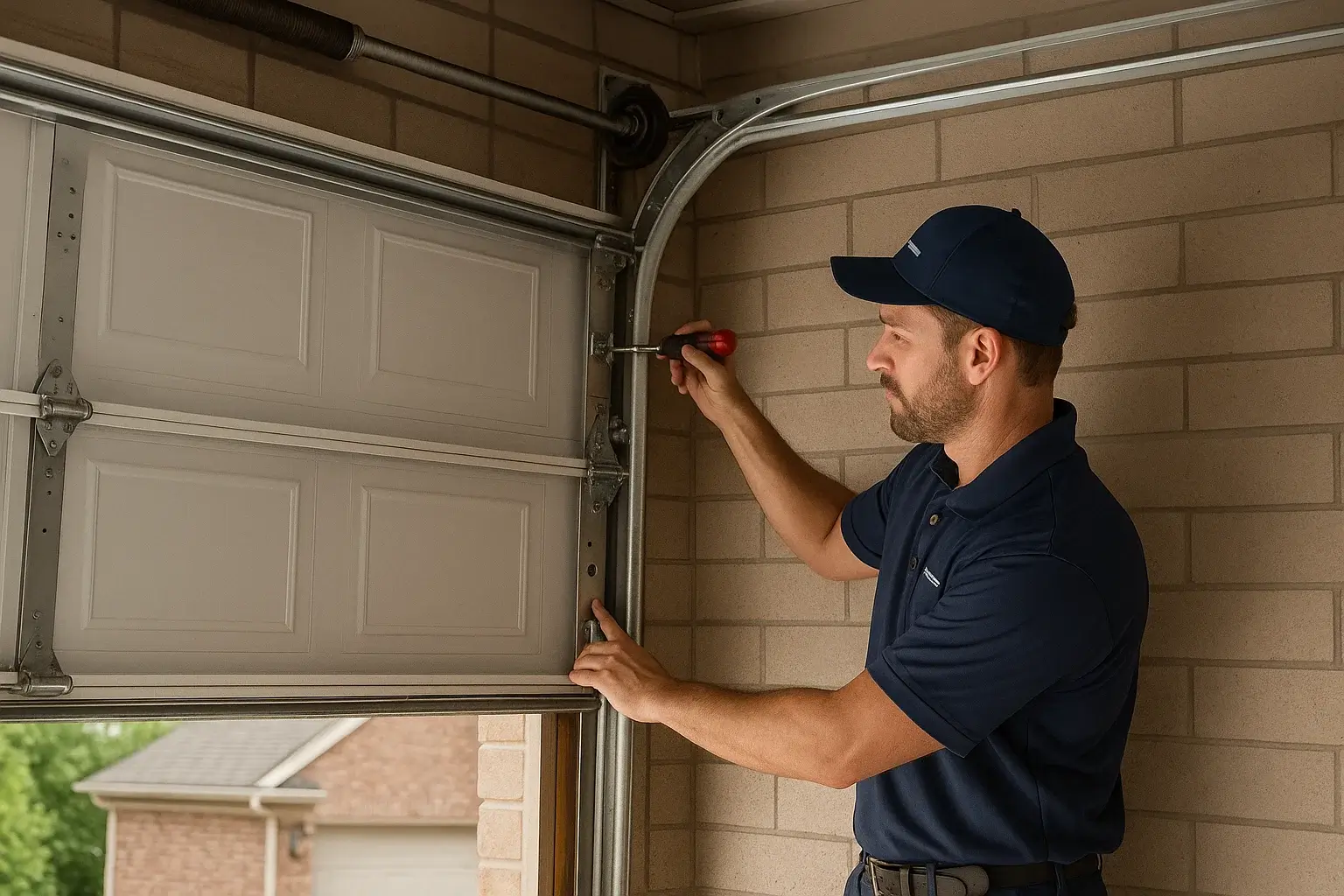
The job of fixing a broken spring shouldn’t be left to an inexperienced handyman. These parts hold a tremendous amount of stored mechanical energy, and a non-skilled attempt at repair without the proper tools can cause serious injury or damage to properties.
Accurate System Diagnostics and Balance Testing
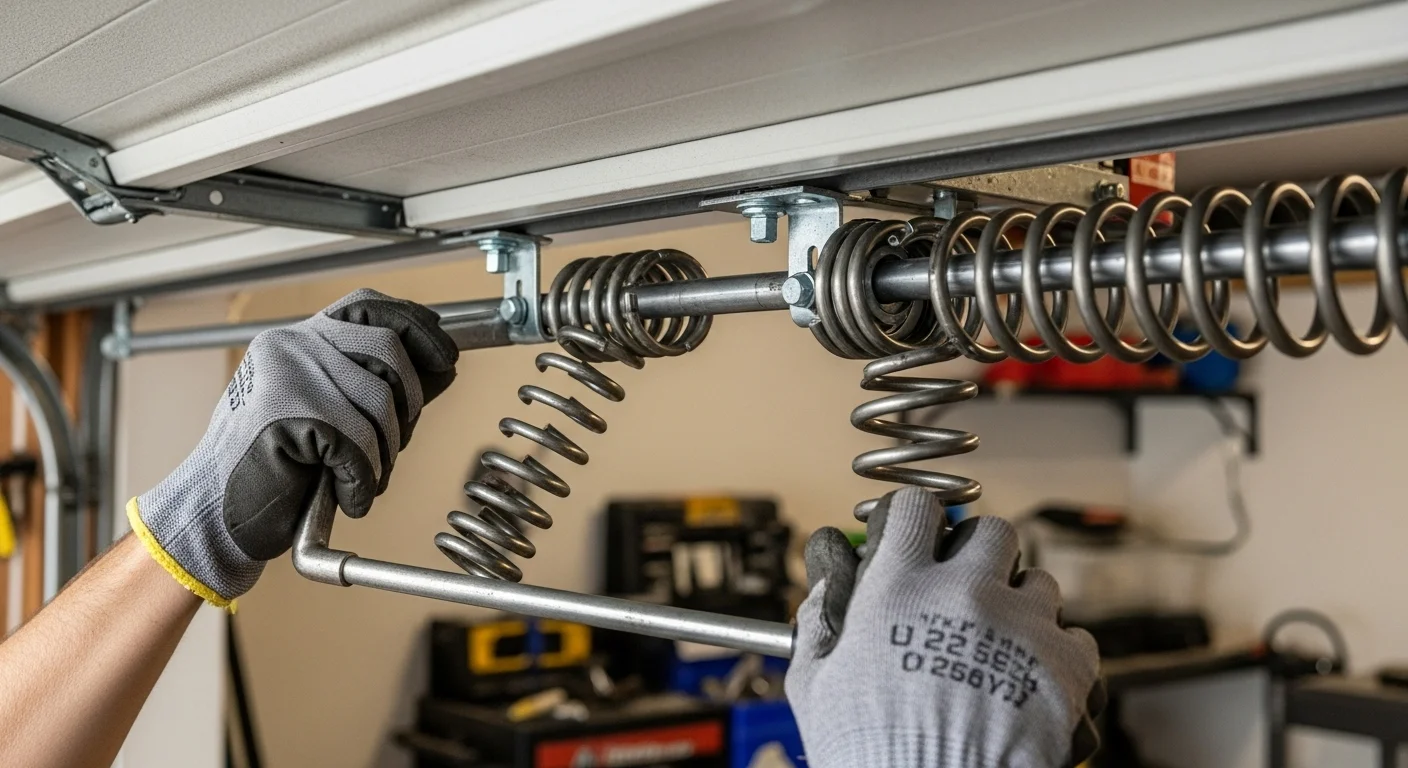
A professional technician first assesses the entire door assembly. You must find out if your system has torsion springs (installed horizontally overhead of the door opening) or extension springs (installed vertically on the sides of the tracks). The technicians verify the weight distribution, track alignment, and cable condition to ensure the root cause of the imbalance is not just the broken spring, but is completely fixed.
Comprehensive Dual Spring Replacement
If one of the garage door springs breaks, it is almost always best to replace both of them if the other spring looks fine. Both springs were fitted at the same time and thus have been subjected to the same cycle wear. One snapped, then the other will snap soon after, and will be under a lot of stress. Replacing them together will result in even tension, an operating life, and a well-balanced door.
Installing High-Cycle Heavy-Duty Springs
A typical replacement may not suffice if it’s a high-traffic garage. Property owners can consider upgrading from the standard 10,000-cycle spring to heavy-duty springs that have 20,000 to 30,000 cycles. These high-quality springs are made of high-quality steel wire and have been coated with advanced technology to prevent rust and cost a lot less in the long run.
When to Call an Emergency Garage Door Repair Specialist
Without a spring, you can’t enjoy your home, and your schedule is disrupted. If you identify the emergency garage door repair as imminent, you will know when to call for a quick garage door repair and close your home.
Common Signs of a Snapped Spring
- A loud Bang: When a high-tension torsion spring snaps, it makes a loud sound that sounds like a gunshot or a loud crack.
- The Door Lifts Only a Few Inches: If the automatic opener starts to work but then stalls shortly after, the safety sensors on the opener are sensing that the door is too heavy to lift safely.
- Visible Gaps in the Coil: A broken torsion spring will be clearly visible with a gap between the two halves of the broken coil.
- Extension Springs: If one side of the door snaps, you will have a crooked door, and the door is likely to jam in the tracks.
Conclusion: Team up with Arizona’s Best Garage Door Experts
A garage door that doesn’t work right is a big hassle that can affect your home’s security, temperature, and daily life. The mechanical parts of a garage door are under a tremendous amount of stress, so it’s quite dangerous to try to do a temporary repair yourself. When you hire the experts for repairs, you ensure that the task is done with precision, safety, and durability.
Elite Garage Doors & Gates is always there to provide dependable solutions when your system fails. With years of hands-on experience and a passion for excellence, we are proud to deliver our products to communities throughout Arizona, such as Phoenix, Scottsdale, Tucson, Prescott, and Flagstaff.
Whether it’s torsion spring replacement, extension spring replacement, installing a new opener, repairing panels, or other major repairs, our expert technicians are more than happy to help. Call Elite Garage Doors & Gates right now for an appointment with a live receptionist or for a free, no-obligation quote for your home.
FAQs:
Can I just pull the emergency release cord if my spring is broken?
No, don’t do it! The release will separate your garage door from your garage door opener. If your springs are broken, there are no longer any counterweighting springs, and the door is just hanging by the opener, so if you pull the release cord, your garage door is going to crash down with all its weight to the ground and can easily injure anyone standing underneath.
How long will a professional spring replacement take?
It usually takes 1 to 2 hours with a skilled garage door repair company. An experienced professional with good commercial-grade tools can get the job done efficiently and safely to replace both your torsion springs and make sure your door is balanced.
How often should I lubricate my springs to avoid any rust?
Spray your garage door spring with some silicone or other garage door lubricant every 6 months. Be sure to wipe down any excess lubrication that gets on your springs. Lubrication helps keep your springs from rusting.
Can I use my automatic garage door opener if I have a cracked spring?
No, don’t do it! Your opener is not designed to carry the entire weight of the garage door if you have a broken spring. So, if you try using the opener, it will burn out your garage door opener because of this added stress to the motor and other parts. Then, not only are you going to have a costly repair to the garage door opener, but you will also have the additional expense of buying your garage door springs.