Your residential garage door may be one of the heaviest and biggest moving objects in your entire house. It acts as a structural security barrier, one of the largest visual components to enhance your property value, and provides daily convenience for your family. Because it usually smooths along just fine, it is all too easy to forget how complex the system actually is.
To prevent the gradual erosion of individual components, which will ultimately culminate in an abrupt mechanical malfunction, recognizing the subtle red flags indicative of approaching failure prior to total electrical system death is imperative. Detecting these signs early will enable you to schedule an expert garage door service to address the problems safely and efficiently, as well as to spare yourself exorbitant future emergency replacement costs and dangerous scenarios.
Read the list below of key signs requiring immediate garage door system mechanical repair.
Changing or Uneven Sound Characteristics During Operation
While your automatic system will always generate a certain norm of running noise, any sudden or recurring change to that acoustic schedule demonstrates component degradation.
Screeching, Grinding, or Squeaking Noises
If your automated gate begins to produce rough squealing or grinding sounds, it can be an indication of high friction caused by a lack of oil lubrication or worn-down ball bearings within your wheels. Either of these mechanical failures means the steel tracks could be crooked or the hanging rollers could have begun to orbit askew, both of which will put major pressure on your electric motor and result in a premature motor burnout.
Slapping or Banging Vibrations
A distinctive clunking or regular slapping noise, indicative of a problem with your garage roller chain or the lifting cables, is another early warning sign. If a cable slides off its drum track because of fraying strands or becomes dislodged as a result of normal use, it causes the door to jerk unevenly and shake, shaking loose the fasteners of the structural track.
Structural Straining and Movement Anomalies
A healthy automatic system will move with a perfectly smooth, fluid motion from the fully closed position to the fully open position. Any aberration from this fluid motion signals a systemic problem.
Hesitation or Sluggishness in Response Times
Upon activating your wall switch or remote control, the door should give an immediate response. If there is a multi-second lag before the motor fires up, or if the door takes only about 25% of its normal speed to travel, then the system is under excessive strain. This sluggish operation often signals an aging automatic opener motor or significant balance issues that require the system to exert twice as much effort to lift the weight.
Jerking, Shaking, or Uneven Rises
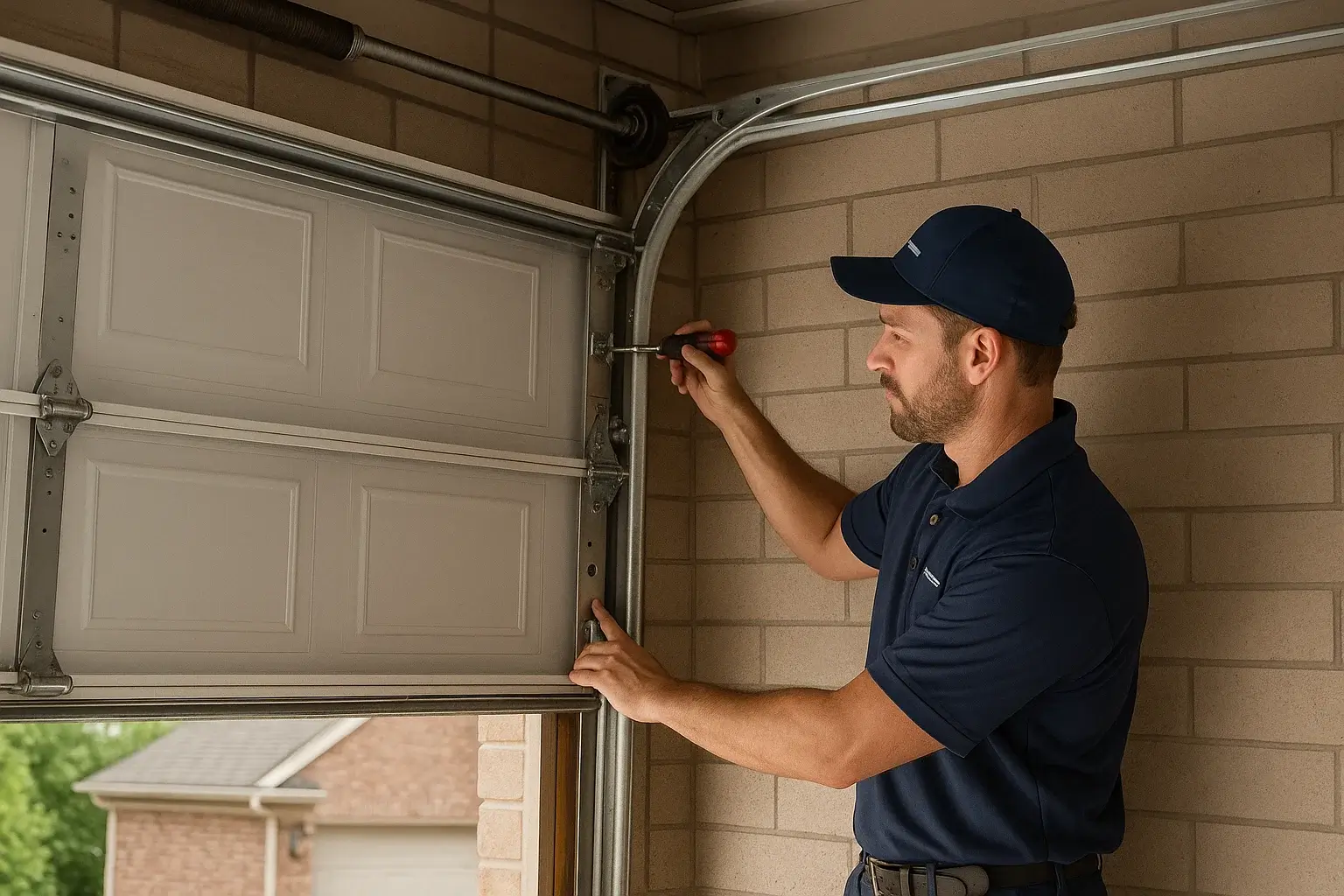
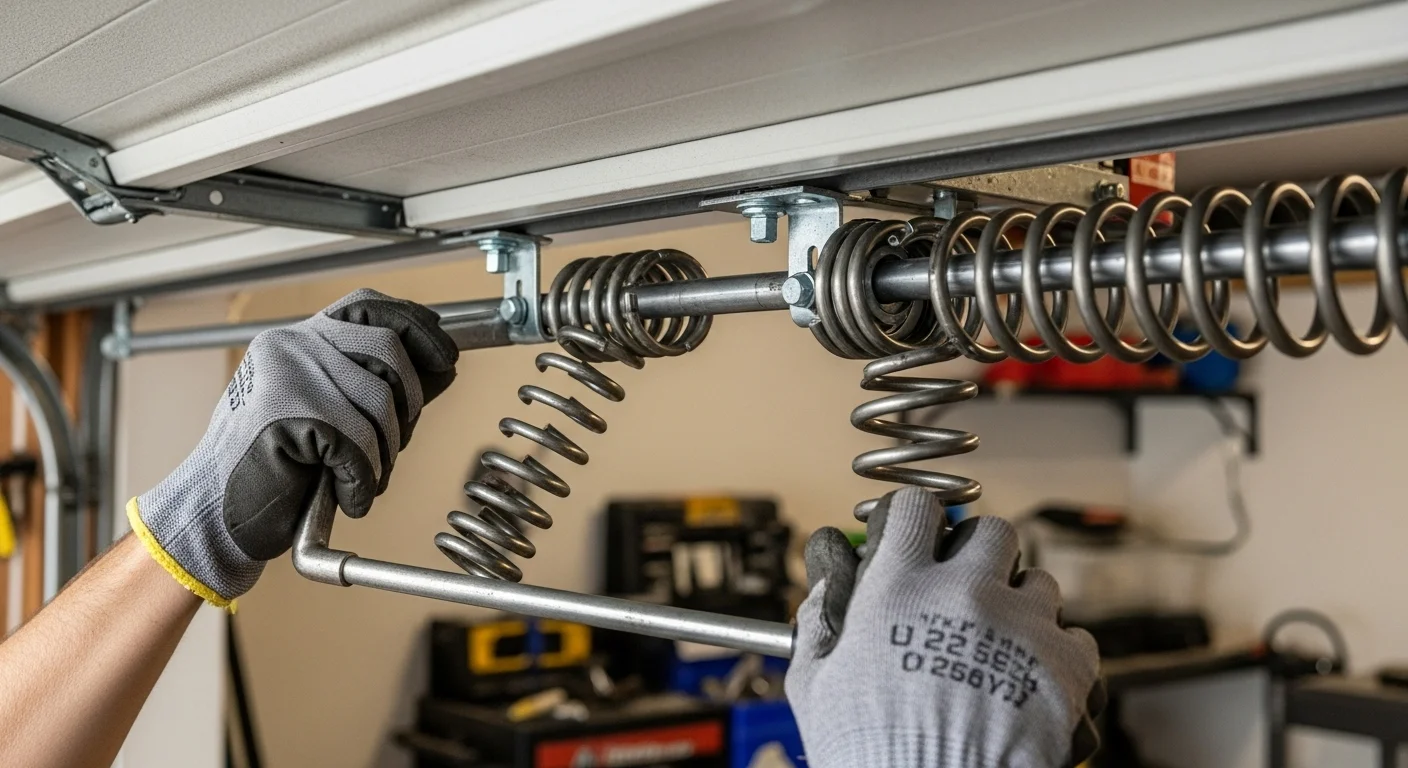
If your door jerks, shudders, or visibly sags on one side, then the structural balance of the system has been compromised. These arching irregularities are extremely perilous. They are most often the symptom of a high-tension torsion spring or extension spring on the brink of snapping, or a track roller that’s jumped out of the track guide.
Physical Damage and Visual Warning Flags
Carrying out a monthly visual review of your hardware is an effective way to identify mechanical weaknesses before they cause an operational breakdown.
Salvaged Cables and Sags in the Springs
Balancing the physical heft of the garage door panels are torsion and extension springs, by providing the extreme lifting force. When looking for dependable garage door repair near me, homeowners should inspect the general condition of the torsion and extension springs and the movement of the steel rolling cables near the bottom brackets. If you find a single strand of a cable uncoiled or broken, the entire cable needs to be replaced. Likewise, if the springs are free of any gaps or rust deposits or are visibly longer, they are no longer functioning correctly.
Depressed Sections and Distended Tracks
Pull the emergency cord on the automated opener and manually open the door halfway. A properly counterbalancing system will hold its position. If your garage door is falling back down into the ground, the spring tension may be too low. Next, inspect the horizontal tracks for any ridging, dull spots, or draft lines that might indicate a dent or bend.
Regular Service and Fine-Tuning Saves Money and Lives
Everyone attempting to fix complicated trackage issues or high-tension spring setups without proper training is a serious safety threat. These mechanicals hold tremendous physical power, and if not properly controlled, could do irreversible damage to your home or you.
Between regular tune-ups, trained technicians have the knowledge to replace broken equipment parts, de-tension the springs for safe handling, and amass a stock of functioning spare pieces. An investment in expert preventive treatment produces years of safe operation.
Conclusion: Protect Your Home with Arizona’s Premier Door Specialists
Your home is safe when the subtle musical shifts and tiny operational irregularities are noticed, and the visual wear characteristics are identified before inconvenient operational glitches occur. Do not wait for a snapping high-tension spring to fail, or an overworked automated opener to burn out, before a tuned suspension system becomes trailered.
When you are in need of a dependable, highly skilled expert garage door technician, call Elite Garage Doors & Gates. Providing full-service, professional results with guaranteed reliability across the State of Arizona, our team is fully trained in residential and commercial repair, precision spring replacement, professional garage installation, automated opener repair, and professional roof and system insulation upgrades, always working directly with leading manufacturers to ensure you get nothing but peak performance, durability, and security in your finished product.
Whether you are in Phoenix, Glendale, Chandler, or any of the local surrounding neighborhoods and communities, please contact Elite Garage Doors & Gates today! Call and speak to a live operator to set your appointment or request your free estimate!
FAQs:
Why does my garage door begin to close, then go back up again?
Your safety sensors are not functioning properly. Dirt on the sensor lenses or objects blocking the control beam near the bottom of your garage door tracks trip the system’s safety alarm, causing the reverse action that prevents crushing injuries. Other reasons are misaimed sensors or low-voltage signals that are out of specification.
How often should my automatic garage system be professionally serviced?
Having your entire garage system professionally inspected and lubricated at least once each year will catch hidden hardware fatigue before it develops into a functioning hazard, and keep system operation smooth and balanced.
Why is it dangerous to replace a garage torsion spring with do-it-yourself tools?
A garage door torsion spring is, essentially, a spring of high-torque energy that, if mishandled, can burst with deadly force. Having professional field service is necessary to remove and replace the spring safely.
Can installing extra thermal insulation in my garage benefit my system?
Installing insulation that is designed to reflect radiant heat is guaranteed to improve your internal garage climate. Your stored belongings, your extended living spaces, and the household electrical bill will all see the difference.